How to connect USNO astronomical data (Sun, Moon, eclipses, seasons) to Cursor
Add the Firecrawl MCP server to Cursor once and it can call the USNO astronomical data (Sun, Moon, eclipses, seasons) API and every other provider in Firecrawl Alexandria, with no USNO astronomical data (Sun, Moon, eclipses, seasons) integration code.
To connect USNO astronomical data (Sun, Moon, eclipses, seasons) to Cursor, add the Firecrawl MCP server to Cursor, sign in on a Firecrawl team with Alexandria enabled, and ask for USNO astronomical data (Sun, Moon, eclipses, seasons) data in plain language. The connection works in Cursor's agent and chat, and you set it up once.
Cursor uses USNO astronomical data (Sun, Moon, eclipses, seasons) as an MCP tool through Firecrawl's hosted MCP server, so you don't install or host a separate MCP server for USNO astronomical data (Sun, Moon, eclipses, seasons).
Cursor is an AI code editor. Its agent uses MCP servers for outside tools, and the Firecrawl MCP server adds web search, scraping and every data provider in Firecrawl Alexandria.
How do I connect USNO astronomical data (Sun, Moon, eclipses, seasons) to Cursor?
Install the Firecrawl MCP server
Open the install dialog in Cursor, check that the URL is Firecrawl's hosted server, then select Install.
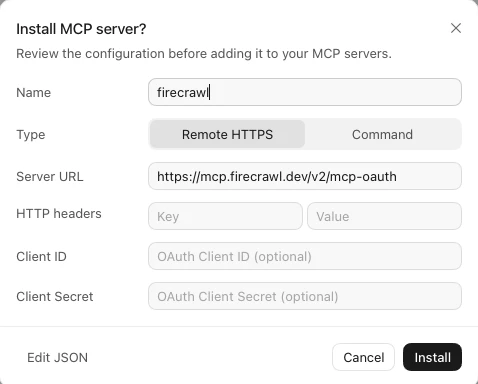
Connect your Firecrawl account
Use the server's sign-in option in Cursor's MCP settings. Firecrawl opens in your browser: sign in, choose a team with Alexandria enabled, and approve access. A green dot next to Firecrawl means it's connected.
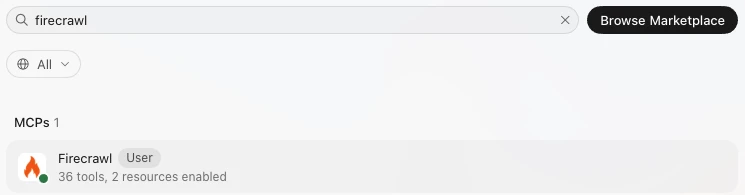
Ask Cursor's agent for the data
In the agent chat, ask in plain language and mention USNO astronomical data (Sun, Moon, eclipses, seasons) or Firecrawl Alexandria. The agent finds the USNO astronomical data (Sun, Moon, eclipses, seasons) capability that fits and runs it. For example:
Use Firecrawl to answer this: What time is sunrise and sunset in Washington DC on 2026-11-11?
What can Cursor do with USNO astronomical data (Sun, Moon, eclipses, seasons)?
Astronomical data computed on request by the US Naval Observatory's Astronomical Applications Department (aa.usno.navy.mil API v4): sunrise, sunset, solar noon and civil twilight, moonrise, moonset and Moon phase with illumination for any place and date from 1700 to 2100; primary Moon phase dates and times (new, first quarter, full, last quarter); the solar eclipses of any year from 1800 to 2050 and what a given location sees during one (1996 to 2026); and equinox, solstice, perihelion and aphelion times. US government work, public domain.
Cursor can run any of USNO astronomical data (Sun, Moon, eclipses, seasons)'s 5 capabilities through Alexandria. Each call is billed in Firecrawl credits on your Firecrawl team.
- Moon phases: Dates and Universal Times of the primary Moon phases (new moon, first quarter, full moon, last quarter) from 1700 to 2100: either the next count phases starting from a date, or every phase of a calendar year. Source: USNO moon/phases. Costs 5 Firecrawl credits per call.
- Seasons: The March and September equinoxes, June and December solstices, perihelion and aphelion of a year (1700 to 2100), with local date and time on the UT offset you pass (optionally with US daylight saving rules). Source: USNO seasons. Costs 5 Firecrawl credits per call.
- Solar eclipse local: What one location sees during a solar eclipse (1996 to 2026): whether it is visible, total, annular or partial there, magnitude, percent of the Sun covered, total and central-phase durations, and the UT time, Sun altitude and azimuth of each contact (begins, totality or annularity, maximum, ends, or sunrise and sunset cutting it). visible is false when the eclipse does not reach the location. USNO's calculator fails for eclipses after 2026 and before 1996, so those years are refused; list later eclipses with solar_eclipses_in_year. Source: USNO eclipses/solar/date. Costs 5 Firecrawl credits per call.
- Solar eclipses in year: The solar eclipses of a calendar year (1800 to 2050) with date and type (total, annular, partial, hybrid). Source: USNO eclipses/solar/year. Costs 5 Firecrawl credits per call.
- Sun moon day: Sun and Moon data for one place on one date (1700 to 2100): sunrise, sunset, solar noon, civil twilight begin and end, day length, moonrise, moonset and Moon transit, the Moon's phase name and percent illuminated, and the nearest primary phase. Times are local on the UT offset you pass (tz_offset_hours, optionally with US daylight saving rules); polar day and night are reported as continuously above or below the horizon. Source: USNO rstt/oneday. Costs 5 Firecrawl credits per call.
What should I ask Cursor?
Name USNO astronomical data (Sun, Moon, eclipses, seasons) or Firecrawl Alexandria in the prompt so Cursor reaches for it. Each example opens in Cursor with the prompt filled in.
- Use Firecrawl to answer this: What time is sunrise and sunset in Washington DC on 2026-11-11?
- Use Firecrawl to answer this: When is the next full moon?
- Use Firecrawl to answer this: Which solar eclipses happen in 2027?
- Use Firecrawl to answer this: How much of the Sun was covered in Dallas during the 8 April 2024 eclipse, and when did totality begin?
Troubleshooting
Why can't Cursor find USNO astronomical data (Sun, Moon, eclipses, seasons)?
If Firecrawl's tools in Cursor stop at search, scrape and parse, the connection is keyless and doesn't include Alexandria. Finish the sign-in from Cursor's MCP settings, or add an API key from a team with Alexandria enabled.
Firecrawl shows a red dot in Cursor. What should I do?
Open Cursor's MCP settings, sign in to Firecrawl again, and restart the agent chat so it loads the tools.
Use USNO astronomical data (Sun, Moon, eclipses, seasons) in other AI apps
The same Firecrawl account reaches USNO astronomical data (Sun, Moon, eclipses, seasons) from other AI apps. Pick one for its setup steps:
- USNO astronomical data (Sun, Moon, eclipses, seasons) in ChatGPT
- USNO astronomical data (Sun, Moon, eclipses, seasons) in Claude
- USNO astronomical data (Sun, Moon, eclipses, seasons) in Grok Bot
 USNO astronomical data (Sun, Moon, eclipses, seasons) in Muse
Other data providers you can connect to Cursor
Frequently Asked Questions
What is Firecrawl?
Firecrawl is the web data API to search, scrape and interact with the web at scale. It turns websites into clean, LLM-ready data for AI agents and apps. The Firecrawl MCP server brings those tools into Cursor, along with every data provider in Firecrawl Alexandria.
What is Firecrawl Alexandria?
Firecrawl Alexandria is Firecrawl's library of 550+ data providers for AI agents, USNO astronomical data (Sun, Moon, eclipses, seasons) among them. Each provider returns structured data through documented capabilities. Cursor finds the capability that fits your question and calls it through the Firecrawl MCP server, so you don't write any integration code. Alexandria needs a Firecrawl account signed in on a team with Alexandria enabled, or an API key from such a team; keyless connections don't include it.
Is there a USNO astronomical data (Sun, Moon, eclipses, seasons) MCP server for Cursor?
Cursor reaches USNO astronomical data (Sun, Moon, eclipses, seasons) through Firecrawl's hosted MCP server, which serves USNO astronomical data (Sun, Moon, eclipses, seasons) and every other Alexandria provider as tools. Add the Firecrawl MCP server once and you don't install or host a separate MCP server for USNO astronomical data (Sun, Moon, eclipses, seasons).
What does connecting USNO astronomical data (Sun, Moon, eclipses, seasons) to Cursor unlock?
Cursor can run all 5 of USNO astronomical data (Sun, Moon, eclipses, seasons)'s capabilities, including Moon phases, Seasons and Solar eclipse local, from any chat, with structured results it can sort, compare and summarize. For example, ask: "Use Firecrawl to answer this: What time is sunrise and sunset in Washington DC on 2026-11-11?" In the same conversation, Cursor can combine USNO astronomical data (Sun, Moon, eclipses, seasons) with Firecrawl's web search and scraping and the other providers in Firecrawl Alexandria.
Do I need my own USNO astronomical data (Sun, Moon, eclipses, seasons) account or API key to use it in Cursor?
No. Cursor calls USNO astronomical data (Sun, Moon, eclipses, seasons) through Firecrawl Alexandria and each call is billed in Firecrawl credits, so you don't need a separate USNO astronomical data (Sun, Moon, eclipses, seasons) account or API key.
How much does it cost to use USNO astronomical data (Sun, Moon, eclipses, seasons) in Cursor?
Each USNO astronomical data (Sun, Moon, eclipses, seasons) call costs 5 Firecrawl credits. The capability list on this page shows each price and its unit. The credits come from the Firecrawl team you connect to Cursor, and finding the right capability is free.
Can Cursor use other providers besides USNO astronomical data (Sun, Moon, eclipses, seasons)?
Yes. The same Firecrawl MCP server reaches every provider in Firecrawl Alexandria, along with Firecrawl's web search and scraping, so you connect once.
Can I use USNO astronomical data (Sun, Moon, eclipses, seasons) in other AI apps?
Yes. Connect Firecrawl to ChatGPT, Claude, Grok Bot, Muse signed in on a Firecrawl team with Alexandria enabled, or use the Firecrawl MCP server, CLI or API with an API key from that team, and the same USNO astronomical data (Sun, Moon, eclipses, seasons) capabilities are available there. Keyless connections don't include Alexandria.