How to connect dbGaP (NCBI database of Genotypes and Phenotypes) to Cursor
Add the Firecrawl MCP server to Cursor once and it can call the dbGaP (NCBI database of Genotypes and Phenotypes) API and every other provider in Firecrawl Alexandria, with no dbGaP (NCBI database of Genotypes and Phenotypes) integration code.
To connect dbGaP (NCBI database of Genotypes and Phenotypes) to Cursor, add the Firecrawl MCP server to Cursor, sign in on a Firecrawl team with Alexandria enabled, and ask for dbGaP (NCBI database of Genotypes and Phenotypes) data in plain language. The connection works in Cursor's agent and chat, and you set it up once.
Cursor uses dbGaP (NCBI database of Genotypes and Phenotypes) as an MCP tool through Firecrawl's hosted MCP server, so you don't install or host a separate MCP server for dbGaP (NCBI database of Genotypes and Phenotypes).
Cursor is an AI code editor. Its agent uses MCP servers for outside tools, and the Firecrawl MCP server adds web search, scraping and every data provider in Firecrawl Alexandria.
How do I connect dbGaP (NCBI database of Genotypes and Phenotypes) to Cursor?
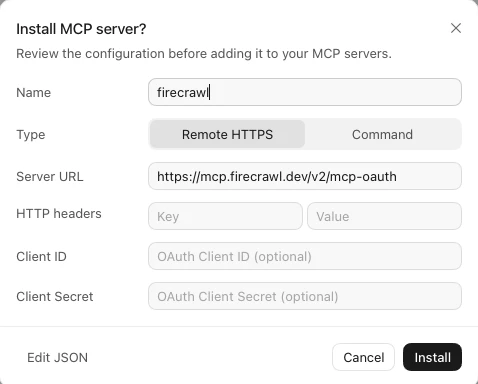
Install the Firecrawl MCP server
Open the install dialog in Cursor, check that the URL is Firecrawl's hosted server, then select Install.
Connect your Firecrawl account
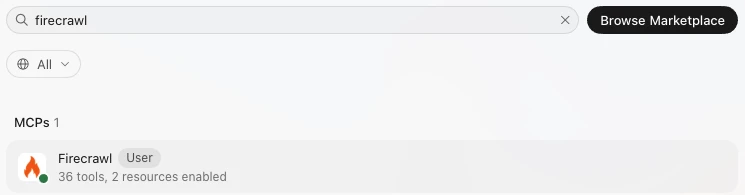
Use the server's sign-in option in Cursor's MCP settings. Firecrawl opens in your browser: sign in, choose a team with Alexandria enabled, and approve access. A green dot next to Firecrawl means it's connected.
Ask Cursor's agent for the data
In the agent chat, ask in plain language and mention dbGaP (NCBI database of Genotypes and Phenotypes) or Firecrawl Alexandria. The agent finds the dbGaP (NCBI database of Genotypes and Phenotypes) capability that fits and runs it. For example:
Use Firecrawl to answer this: Which dbGaP studies have whole-genome sequencing of people with sleep apnea, and can a for-profit company use them?
What can Cursor do with dbGaP (NCBI database of Genotypes and Phenotypes)?
dbGaP, NCBI's database of Genotypes and Phenotypes: public metadata and access conditions for 3,700+ controlled-access human genomic studies and biobanks (Million Veteran Program, TOPMed, Framingham, GTEx, cancer and disease consortia). Search studies and their GWAS/PheWAS analyses; read one study's consent groups, data use limitations (disease-specific use, IRB approval, publication or collaboration requirements, not-for-profit only), Data Access Committees, participants per consent group, sub-studies and linked PubMed articles; see which summary results are public and which need a dbGaP Data Access Request. Metadata and links only: no individual-level data and no result files.
Cursor can run any of dbGaP (NCBI database of Genotypes and Phenotypes)'s 3 capabilities through Alexandria. Each call is billed in Firecrawl credits on your Firecrawl team.
- Get study: One dbGaP study by accession (`phs000954`, `phs000954.v5.p2`) or dbGaP study URL, at its current release: the study's metadata as in `search_studies` with the full description and MeSH conditions; how the data are obtained (individual-level data through dbGaP Authorized Access after a Data Access Request, or not offered through dbGaP), the Data Use Certification, the platforms that store the data (dbGaP, NHLBI BioData Catalyst, AnVIL), release date, dbGaP's notes and whether genomic summary results may be posted publicly; each consent group with its code, name, abbreviation, decoded terms (IRB, PUB, COL, NPU, MDS, GSO), full data use limitation text, Data Access Committee with contact address, and participants and samples in the group; sub-studies, other dbGaP studies that share participants, and linked PubMed articles. Participant counts, overlapping studies, the full description and articles come from dbGaP's telemetry report, FHIR and elink; when one of those fails the call still answers, with a warning and those fields null or empty. An older version in the input is answered with the current release and a note; an unknown accession is `not_found`. Costs 5 Firecrawl credits per call.
- Search studies: Search dbGaP (NCBI's database of Genotypes and Phenotypes) for controlled-access human genomic studies and biobanks, such as the Million Veteran Program, TOPMed cohorts (Framingham, Cleveland Family Study, HCHS/SOL), GTEx and disease consortia, by words in their name, description, diseases and variables; every word must match, and an accession such as `phs000007` also matches its sub-studies. Optionally keep studies with one molecular data type. Each result is the study's public metadata: accession and current version, name, description excerpt, design, NIH institute, main disease with MedGen UID, molecular data types, genotyping platforms, consent groups with their codes decoded (general, health/medical/biomedical or disease-specific use; IRB approval, publication, collaboration, not-for-profit only (NPU), methods development, genetic studies only), dbGaP's designation for public posting of genomic summary results (GSR), cloud platforms that also host the data, parent study, counts of subjects, samples, variables, datasets and analyses, computed ancestry and links. Metadata only: the data need an approved dbGaP Data Access Request. Costs 5 Firecrawl credits per call.
- Search analyses: Search dbGaP's analyses, the genome-wide association (GWAS), PheWAS and linkage summary-result sets submitted with studies, such as the Million Veteran Program gwPheWAS (phs002453, 6,000+ analyses) and MVP lipid and blood pressure GWAS (phs001672), by trait or analysis words, within one study, or both. Each result gives the analysis accession (`pha010373`), name, trait as a MeSH heading, population, locus type, description excerpt, total, case and control counts when the description states them, the study, and dbGaP's GSR designation for that study: `unrestricted` means the summary results may be posted publicly (dbGaP's public FTP and Genome Browser), `restricted` means they are released only through a Data Access Request. Links go to the analysis page, the Genome Browser view and the study's public FTP analyses directory. Result files are not read. Costs 5 Firecrawl credits per call.
What should I ask Cursor?
Name dbGaP (NCBI database of Genotypes and Phenotypes) or Firecrawl Alexandria in the prompt so Cursor reaches for it. Each example opens in Cursor with the prompt filled in.
- Use Firecrawl to answer this: Which dbGaP studies have whole-genome sequencing of people with sleep apnea, and can a for-profit company use them?
- Use Firecrawl to answer this: What are the consent groups and data use limitations of the Cleveland Family Study (phs000954), and who approves access?
- Use Firecrawl to answer this: Which Million Veteran Program insomnia GWAS summary results are public, and which need a dbGaP Data Access Request?
- Use Firecrawl to run dbGaP (NCBI database of Genotypes and Phenotypes)'s Get study capability. Inspect the Alexandria inputs, ask for any missing required details, and return a small sample with sources.
Troubleshooting
Why can't Cursor find dbGaP (NCBI database of Genotypes and Phenotypes)?
If Firecrawl's tools in Cursor stop at search, scrape and parse, the connection is keyless and doesn't include Alexandria. Finish the sign-in from Cursor's MCP settings, or add an API key from a team with Alexandria enabled.
Firecrawl shows a red dot in Cursor. What should I do?
Open Cursor's MCP settings, sign in to Firecrawl again, and restart the agent chat so it loads the tools.
Use dbGaP (NCBI database of Genotypes and Phenotypes) in other AI apps
The same Firecrawl account reaches dbGaP (NCBI database of Genotypes and Phenotypes) from other AI apps. Pick one for its setup steps:
- dbGaP (NCBI database of Genotypes and Phenotypes) in ChatGPT
- dbGaP (NCBI database of Genotypes and Phenotypes) in Claude
- dbGaP (NCBI database of Genotypes and Phenotypes) in Grok Bot
 dbGaP (NCBI database of Genotypes and Phenotypes) in Muse
Other data providers you can connect to Cursor
Frequently Asked Questions
What is Firecrawl?
Firecrawl is the web data API to search, scrape and interact with the web at scale. It turns websites into clean, LLM-ready data for AI agents and apps. The Firecrawl MCP server brings those tools into Cursor, along with every data provider in Firecrawl Alexandria.
What is Firecrawl Alexandria?
Firecrawl Alexandria is Firecrawl's library of 550+ data providers for AI agents, dbGaP (NCBI database of Genotypes and Phenotypes) among them. Each provider returns structured data through documented capabilities. Cursor finds the capability that fits your question and calls it through the Firecrawl MCP server, so you don't write any integration code. Alexandria needs a Firecrawl account signed in on a team with Alexandria enabled, or an API key from such a team; keyless connections don't include it.
Is there a dbGaP (NCBI database of Genotypes and Phenotypes) MCP server for Cursor?
Cursor reaches dbGaP (NCBI database of Genotypes and Phenotypes) through Firecrawl's hosted MCP server, which serves dbGaP (NCBI database of Genotypes and Phenotypes) and every other Alexandria provider as tools. Add the Firecrawl MCP server once and you don't install or host a separate MCP server for dbGaP (NCBI database of Genotypes and Phenotypes).
What does connecting dbGaP (NCBI database of Genotypes and Phenotypes) to Cursor unlock?
Cursor can run dbGaP (NCBI database of Genotypes and Phenotypes)'s Get study, Search studies and Search analyses, from any chat, with structured results it can sort, compare and summarize. For example, ask: "Use Firecrawl to answer this: Which dbGaP studies have whole-genome sequencing of people with sleep apnea, and can a for-profit company use them?" In the same conversation, Cursor can combine dbGaP (NCBI database of Genotypes and Phenotypes) with Firecrawl's web search and scraping and the other providers in Firecrawl Alexandria.
Do I need my own dbGaP (NCBI database of Genotypes and Phenotypes) account or API key to use it in Cursor?
No. Cursor calls dbGaP (NCBI database of Genotypes and Phenotypes) through Firecrawl Alexandria and each call is billed in Firecrawl credits, so you don't need a separate dbGaP (NCBI database of Genotypes and Phenotypes) account or API key.
How much does it cost to use dbGaP (NCBI database of Genotypes and Phenotypes) in Cursor?
Each dbGaP (NCBI database of Genotypes and Phenotypes) call costs 5 Firecrawl credits. The capability list on this page shows each price and its unit. The credits come from the Firecrawl team you connect to Cursor, and finding the right capability is free.
Can Cursor use other providers besides dbGaP (NCBI database of Genotypes and Phenotypes)?
Yes. The same Firecrawl MCP server reaches every provider in Firecrawl Alexandria, along with Firecrawl's web search and scraping, so you connect once.
Can I use dbGaP (NCBI database of Genotypes and Phenotypes) in other AI apps?
Yes. Connect Firecrawl to ChatGPT, Claude, Grok Bot, Muse signed in on a Firecrawl team with Alexandria enabled, or use the Firecrawl MCP server, CLI or API with an API key from that team, and the same dbGaP (NCBI database of Genotypes and Phenotypes) capabilities are available there. Keyless connections don't include Alexandria.