How to connect NASA Exoplanet Archive to Grok Bot
Add the Firecrawl plugin to Grok Bot once and it can call the NASA Exoplanet Archive API and every other provider in Firecrawl Alexandria, with no NASA Exoplanet Archive integration code.
To connect NASA Exoplanet Archive to Grok Bot, add the Firecrawl plugin to Grok Bot, sign in on a Firecrawl team with Alexandria enabled, and ask for NASA Exoplanet Archive data in plain language. The connection works in every Bot in your Grok Bot account, and you set it up once.
Grok Bot uses NASA Exoplanet Archive as an MCP tool through Firecrawl's hosted MCP server, so you don't install or host a separate MCP server for NASA Exoplanet Archive.
Grok Bot is xAI's agent app. Plugins give your Bots outside tools, and the Firecrawl plugin adds web search, scraping and every data provider in Firecrawl Alexandria.
How do I connect NASA Exoplanet Archive to Grok Bot?
Add the Firecrawl plugin
In Grok Bot, open Connect apps from the sidebar, find Firecrawl and select Connect. You can also open Firecrawl's plugin listing and select Add to Grok Bot, which opens the desktop app to finish the install.
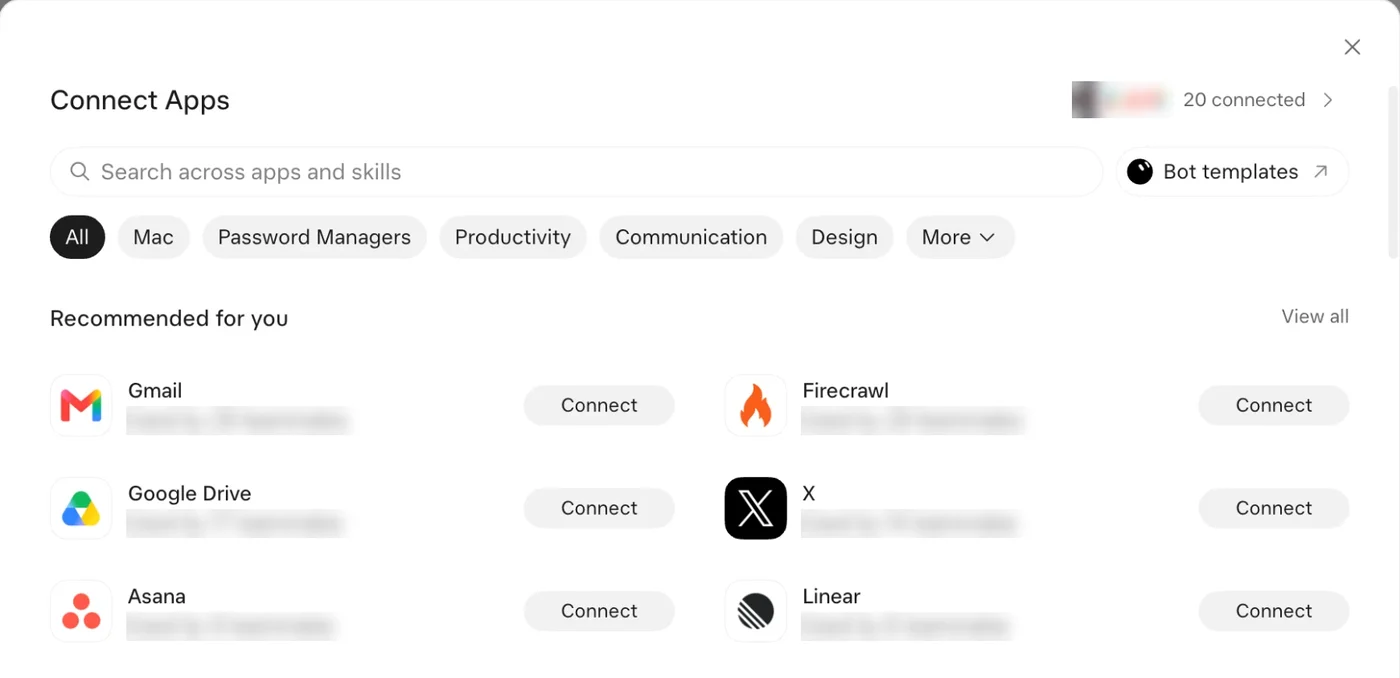
Connect your Firecrawl account
Grok Bot opens Firecrawl in your browser. Sign in, choose a team with Alexandria enabled, and select Authorize. The screen names Cursor, because the plugin is published on the Cursor Marketplace. No account yet? You can create one for free in the same flow.
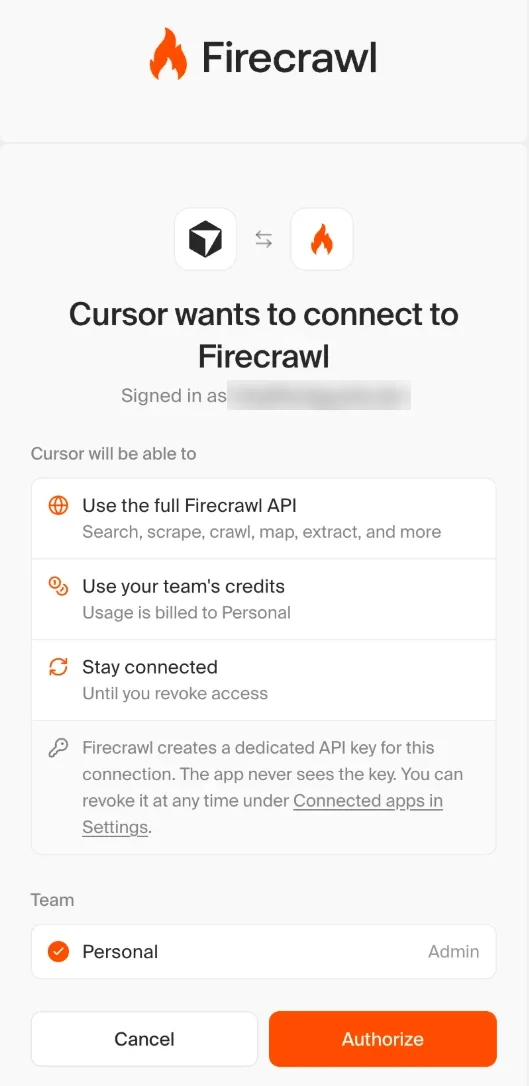
Ask your Bot for the data
In a chat, ask in plain language and mention NASA Exoplanet Archive or Firecrawl Alexandria. To make sure the Bot uses Firecrawl, type @ and choose Firecrawl first. For example:
Use Firecrawl to answer this: How big is TRAPPIST-1 e, how long is its year and how warm is it?
What can Grok Bot do with NASA Exoplanet Archive?
Confirmed exoplanets from the NASA Exoplanet Archive (NExScI at IPAC/Caltech), read live through its public TAP service from the Planetary Systems Composite Parameters table: one row per confirmed planet with the archive's best combined orbit, radius, mass, temperature and discovery values, plus its host star and system. Look up a planet by name, a host star's whole system, or search every confirmed planet by discovery method, facility, year, radius, mass, orbital period, equilibrium temperature and distance. The archive updates weekly; please acknowledge the NASA Exoplanet Archive when publishing results.
Grok Bot can run any of NASA Exoplanet Archive's 3 capabilities through Alexandria. Each call is billed in Firecrawl credits on your Firecrawl team.
- Get planet: One confirmed exoplanet by name from the archive's composite parameters: discovery (year, method, facility, publication month), orbital period, semi-major axis, eccentricity, radius and mass in Earth and Jupiter units with how the mass was obtained, equilibrium temperature, insolation, density, the archive's controversial flag, its host star (spectral type, temperature, radius, mass, metallicity, age) and system (star and planet counts, distance, V magnitude, coordinates). Source: TAP sync over pscomppars, one request. Costs 5 Firecrawl credits per call.
- Get system: A host star and all its confirmed planets: the star (spectral type, temperature, radius, mass, metallicity, age), the system (star and planet counts, distance, V magnitude, coordinates) and every planet with the same fields get_planet returns, in name order. The archive picks stellar values per planet, so star shows the first planet's and star_parameters_vary says when they differ. Source: TAP sync over pscomppars, one request. Costs 5 Firecrawl credits per call.
- Search planets: Search all confirmed exoplanets (about 6,400) by discovery method, discovery facility, host star, discovery year, radius, mass, orbital period, equilibrium temperature and distance, sorted by newest or oldest discovery, nearest system, radius, orbital period or name. Returns up to 100 planets with the same fields get_planet returns for a planet, the total number of matches and whether the list was cut. With no filters it lists the most recently published discoveries. Source: TAP sync over pscomppars; one request, plus a count request when more planets match than the limit. Costs 5 Firecrawl credits per call.
What should I ask Grok Bot?
Name NASA Exoplanet Archive or Firecrawl Alexandria in the prompt so Grok Bot reaches for it.
- Use Firecrawl to answer this: How big is TRAPPIST-1 e, how long is its year and how warm is it?
- Use Firecrawl to list every planet orbiting TRAPPIST-1 with its radius and orbital period.
- Use Firecrawl to answer this: Which rocky-sized transiting planets with Earth-like temperatures are closest to us?
- Use Firecrawl to answer this: What were the first exoplanets found by pulsar timing?
Troubleshooting
Why doesn't my Bot use NASA Exoplanet Archive?
Attach Firecrawl to the chat with @ before you ask, and name NASA Exoplanet Archive or Firecrawl Alexandria in the prompt.
Add to Grok Bot doesn't open the app. What should I do?
Install the Grok Bot desktop app first, or open Connect apps in Grok Bot and search for Firecrawl.
Use NASA Exoplanet Archive in other AI apps
The same Firecrawl account reaches NASA Exoplanet Archive from other AI apps. Pick one for its setup steps:
- NASA Exoplanet Archive in ChatGPT
- NASA Exoplanet Archive in Claude
- NASA Exoplanet Archive in Cursor
 NASA Exoplanet Archive in Muse
Other data providers you can connect to Grok Bot
Frequently Asked Questions
What is Firecrawl?
Firecrawl is the web data API to search, scrape and interact with the web at scale. It turns websites into clean, LLM-ready data for AI agents and apps. The Firecrawl plugin brings those tools into Grok Bot, along with every data provider in Firecrawl Alexandria.
What is Firecrawl Alexandria?
Firecrawl Alexandria is Firecrawl's library of 550+ data providers for AI agents, NASA Exoplanet Archive among them. Each provider returns structured data through documented capabilities. Grok Bot finds the capability that fits your question and calls it through the Firecrawl plugin, so you don't write any integration code. Alexandria needs a Firecrawl account signed in on a team with Alexandria enabled, or an API key from such a team; keyless connections don't include it.
Is there a NASA Exoplanet Archive MCP server for Grok Bot?
Grok Bot reaches NASA Exoplanet Archive through Firecrawl's hosted MCP server, which serves NASA Exoplanet Archive and every other Alexandria provider as tools. Add the Firecrawl plugin once and you don't install or host a separate MCP server for NASA Exoplanet Archive.
What does connecting NASA Exoplanet Archive to Grok Bot unlock?
Grok Bot can run NASA Exoplanet Archive's Get planet, Get system and Search planets, from any chat, with structured results it can sort, compare and summarize. For example, ask: "Use Firecrawl to answer this: How big is TRAPPIST-1 e, how long is its year and how warm is it?" In the same conversation, Grok Bot can combine NASA Exoplanet Archive with Firecrawl's web search and scraping and the other providers in Firecrawl Alexandria.
Do I need my own NASA Exoplanet Archive account or API key to use it in Grok Bot?
No. Grok Bot calls NASA Exoplanet Archive through Firecrawl Alexandria and each call is billed in Firecrawl credits, so you don't need a separate NASA Exoplanet Archive account or API key.
How much does it cost to use NASA Exoplanet Archive in Grok Bot?
Each NASA Exoplanet Archive call costs 5 Firecrawl credits. The capability list on this page shows each price and its unit. The credits come from the Firecrawl team you connect to Grok Bot, and finding the right capability is free.
Can Grok Bot use other providers besides NASA Exoplanet Archive?
Yes. The same Firecrawl plugin reaches every provider in Firecrawl Alexandria, along with Firecrawl's web search and scraping, so you connect once.
Can I use NASA Exoplanet Archive in other AI apps?
Yes. Connect Firecrawl to ChatGPT, Claude, Cursor, Muse signed in on a Firecrawl team with Alexandria enabled, or use the Firecrawl MCP server, CLI or API with an API key from that team, and the same NASA Exoplanet Archive capabilities are available there. Keyless connections don't include Alexandria.